The Pearl Fishers
Opera in three acts (1863)
Music by Georges Bizet
Text by Michel Carré and Eugène Cormon
Duration: approx. 2:30 h including one interval after the first act
Language: Performed in French with German and English surtitles
Recommended age: 12 and up
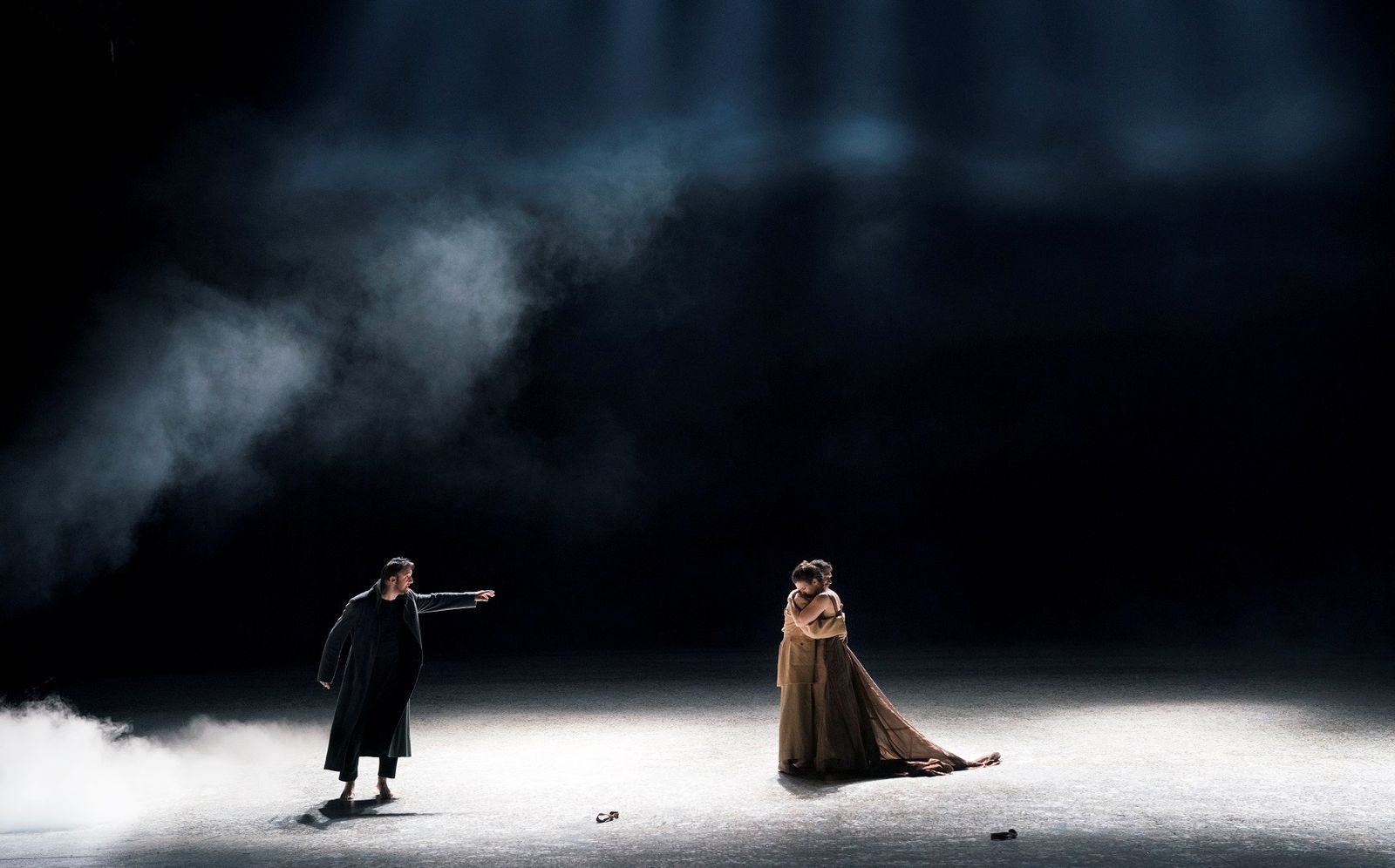
Against the backdrop of a distant island paradise, Georges Bizet tells a love triangle complicated by true friendship: once before, love for the Brahmin priestess Leïla nearly drove the longtime friends Zurga and Nadir apart. Although both men have sworn to renounce the beautiful young woman, neither this promise nor Leïla’s vow of chastity can prevent her and Nadir from being overcome by desire when they meet again.
When the couple is discovered by the high priest, Zurga, as leader of the pearl fishers’ village, is expected to pronounce the death sentence on the two perjurers. Torn between friendship and jealousy, revenge and duty, Zurga begins to waver… Twelve years before the worldwide success of Carmen, the 25-year-old Bizet achieved his breakthrough as an opera composer with The Pearl Fishers. The then-popular exoticism of the subject inspired him to write a score rich in colorful orchestration, captivating melodies, and effective theatrical music, unfolding both in large choral tableaux and in chamber-like scenes between the protagonists. The dramatic and musical centerpiece is the famous duet “Au fond du temple saint” by Zurga and Nadir—one of the great gems of opera literature, to which the rediscovery of this still rarely performed work is largely owed.
PLOT
ACT 1
A beach along an isle inmidth the sea: as always, pearl diving season begins at this time of year, and the fishermen have gathered around their leader Zurga. With their singing, they ask the gods for protection from dangers and from the cruel whims of nature. Nadir, who left the community of pearl fishers many years ago to travel around the world, has reappeared. The return is welcomed by all, especially by Zurga, who whom he shared a deep friendship from his youth. We learn that this bond threatened to break years ago when on their last journey together the two fell endlessly in love with the same beautiful stranger. To keep from becoming enemies, they both decided to sacrifice their love for this “goddess.” In remembering this experience, the two men celebrate their bond. But Nadir seems reluctant. A short while later, the community awaits the arrival of a priestess who is to sing for the wellbeing of the pearl fishers and pray for them to appease the gods and drive away all evil spirits. The high priest Nourabad brings the veiled woman to the beach. Zurga is about to take an oath from the stranger to remain in isolation and without a man for the duration of her stay with them, dedicating herself fully to her task. As payment, she can expect the most precious pearl, but if she breaks her promise this would mean her death. But Nadir knows who the veiled priestess is; he recognizes it in her voice, and she also sees him for a brief moment and is deeply shocked. Zurga, who notices her sudden panic, offers her the chance to refrain from taking the oath before it is too late, but she composes herself, declines his offer and swears the oath. The pearl fishers pray to the god Brahma before the evening falls. Nadir is plagued by his conscience. He had already broken his promise and met secretly with the beautiful woman Leïla in the past. Already back then, their forbidden love for one another had been fervent. And now Nadir has betrayed his friend once again by following his loved one here. But what he didn’t know: Leïla now has a task that makes it mortally dangerous for the two to see one another. Nadir suffers from this lovesickness and immerses himself at the same time in his imagining his love for Leïla. Nourabad calls on Leïla to fulfill her duties office and to sing high on a rock to plead with the gods to protect the pearl fishers. But then the old man leaves her alone. She knows that she is not only singing for the heavens, but also has a secret listener. She feels protected and deeply attracted to him.
ACT 2
Leïla’s work is done for the night. Nourabad brings her to a remote, holy place, securely guarded where she can sleep. He ensures her that she is absolutely out of danger here. Leïla trusts the old man and tells him how she once experienced a highly dangerous situation: risking her own life, she once saved the life of a refugee who then gave her a pearl necklace that she has worn since then. Nourabad listens to her story, then leaving Leïla behind. Leïla is afraid in her loneliness, but comforts herself knowing that her loved one is somewhere near by. And then Nadir suddenly emerges from the darkness! He has achieved the impossible and has made his way to her over the cliffs and past the guards. At first she rejects him in horror: it would be all too easy for them to be discovered and punished with death. But their love is stronger: they mutually declare their unconditional affection for one another. A storm suddenly breaks loose. Leïla asks Nadir to go, saying he could come back the next night. But just before his departure, the two are surprised by Nourabad, who cries out in outrage in the face of Leïla’s infidelity. Nadir flees, but is captured by the fishers. In the presence of the entire community of pearl fishers, Nourabad announces that the two lovers must be executed. Only this could satisfy the gods, whose rage was revealed in the violent storm that has broken out upon them. In the last minute Zurga intervenes: with all his authority, he orders that the couple be freed. The people agree reluctantly. But Nourabad will not tolerate this iniquity and pulls away Leïla’s veil to expose her to all the people. And now Zurga sees to his great horror that the stranger is the very “goddess” over whom he had competed years ago with Nadir. A righteous rage over his friend’s betrayal flames up within him, and he condemns Nadir and Leïla: they are to die the very next morning.
ACT 3
That very same night, the storm has now passed, and Zurga regrets his decision made in the heat of the moment. His friendship to Nadir gains the upper hand and he is ready to reverse his verdict, when Leïla emerges in his tent. She wants to beg for mercy for Nadir and offers her own death in sacrifice. It is only now that Zurga realizes how much they love one another. His love for Leïla, which he has repressed over years, flames up once again, alongside the horrible sense of disappointment at having been deceived for so long. He confesses to the horrified Leïla his great love, and enrages himself to feel such a fervent jealously that he finally confirms the penalty of death for both, no matter how much Leïla begs for mercy for Nadir. Her contempt for Zurga now knows no bounds, and she screams her hate for him to his face, while Zurga squirms before her in powerless rage. When Leïla is taken away, she regains her composure and finds her pride. While leaving, she hands over her pearl necklace and asks him to bring it to her mother. Zurga recognizes in this chain the sign of gratitude that he had once given a girl who had saved him from great danger. He now realizes whom he is sending to her death. In the morning, the execution is to be carried out under Nourabad’s supervision. The fishers have sung themselves into a kind of trance and cannot wait for the sun to finally rise. The two lovers are ready to die together. The time has come, but Zurga interrupts the ceremony. What everyone thinks is the dawn twilight is in reality the village in flames. They should all run to save their children and all their possessions. In panic, the people run off. Zurga, Leïla and Nadir remain behind. Zurga frees the lovers from their chains. He admits that he was the one who set the huts of the pearl fishers on fire. Friendship and the power of love have won out, Leïla and Nadir flee. Zurga alone remains behind. He has done the right thing, he is sure of that, even though he now faces an uncertain future.
 en
en 
 de
de it
it fr
fr es
es ru
ru jp
jp ro
ro








 State Opera Unter den Linden
 Fri 02 Apr 2027 - Fri 23 Apr 2027





 RM EUROPA TICKET GmbH
 Call now
 Book now