


en
en v
Phone
Cart0 Tickets
Total: 0
Account
Calendar
Search
Menu

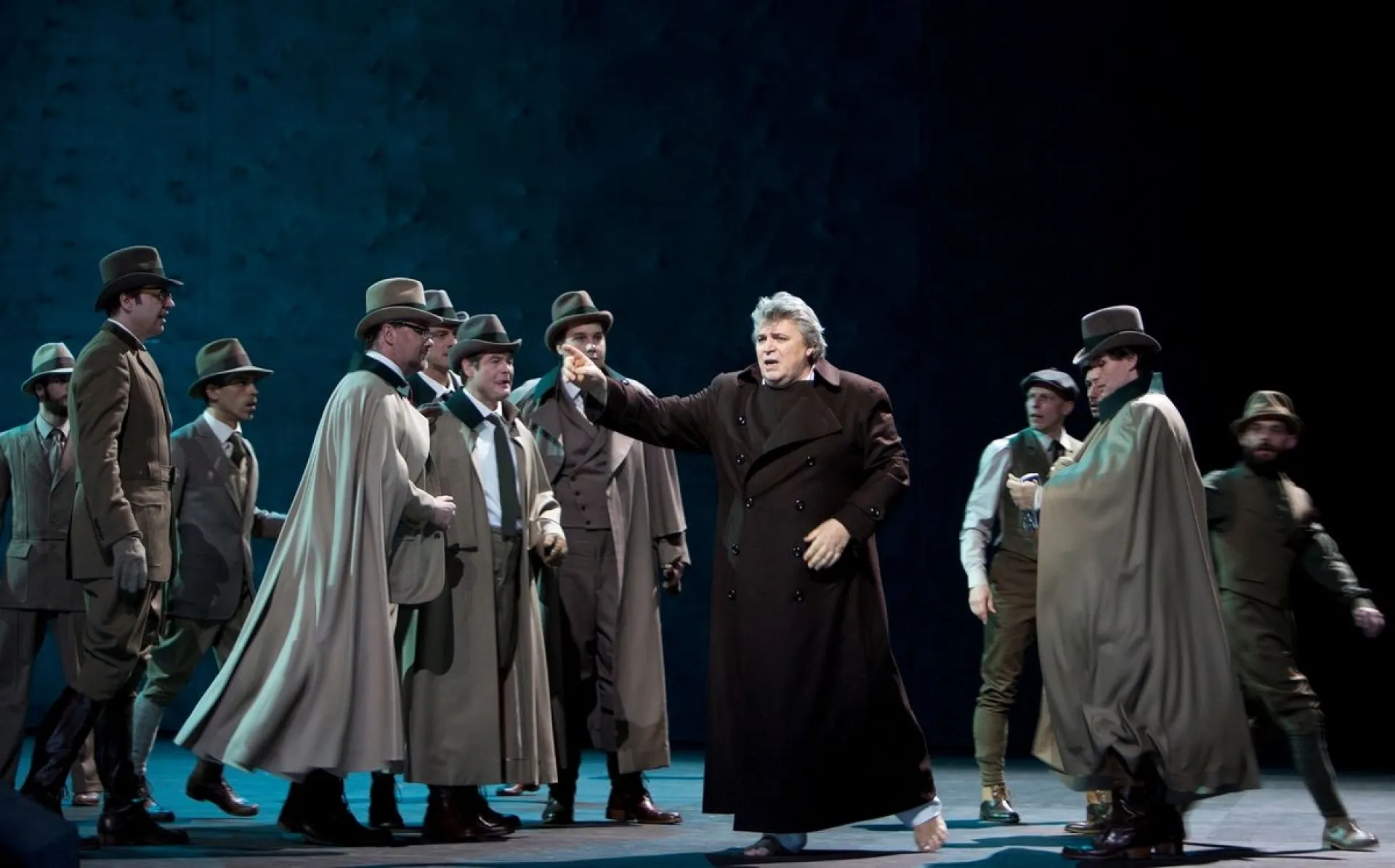
Tannhäuser

VenueState Opera Unter den Linden
CalendarSat 20 Mar 2027 - Fri 26 Mar 2027
Synopsis/Details

Tannhäuser
and the Song Contest at Wartburg
Romantic Opera in Three Acts (1845)
Music and libretto by Richard Wagner


Duration: approx. 4 hrs. 25 min., including two intervals after the first and second acts
Language: Performed in German with German and English surtitles
Recommended age: 16+


After spending seven years indulging in sensual pleasures in the realm of the goddess of love, Venus, the minstrel Tannhäuser longs to return to the world of human society, above all to his earthly beloved, Elisabeth. Yet his desire to unite art and life, erotic passion and sacred love ultimately fails in the face of the rigid conventions of Wartburg's bigoted society, as well as his own uncompromising nature.

For the libretto of his Romantic opera, premiered in Dresden in 1845, Richard Wagner drew on literary adaptations of medieval legends by Ludwig Tieck, E. T. A. Hoffmann, and Ludwig Bechstein. He fused two legendary traditions: the Song Contest at Wartburg surrounding Heinrich von Ofterdingen at the beginning of the thirteenth century, and the legend of the minstrel and lyric poet Tannhäuser, who is said to have sought absolution in vain from the Pope for the sins he committed in the Venusberg. The religious and philosophical dualism between unbridled sensuality and the idealized purity of spiritual love is reflected in Wagner's score through two sharply contrasting musical worlds: the seductive, sensual sounds of Venus's realm and the solemn choruses of the pilgrims in the earthly world. These opposing worlds collide irreconcilably during the central song contest. While the other minstrels celebrate the chaste nature of love, Tannhäuser causes a scandal by publicly confessing his stay in the Venusberg. Unable to reconcile these two worlds, Tannhäuser dies, rejected by the Pope, yet redeemed through Elisabeth's love.


Plot


Act one

Tannhäuser, a minnesinger from the court of Hermann, Landgrave of Thuringia, has been at the Venusberg for some time now and is the lover of the goddess of love. In the midst of a bacchanal, the singer recalls his earlier life among humanity. He decides to leave Venus and her heavenly kingdom to return to earth. Venus tries to hold him back. But only when he calls to the Virgin Mary does the Venusberg let him go. Tannhäuser finds himself in a valley not far from the Wartburg. A young shepherd praises the arrival of spring. A chorus of pilgrims on their way to Rome passes by in song, and Tannhäuser joins in. He is thus found by Landgrave Hermann and the singers accompanying him, Wolfram von Eschenbach, Walther von der Vogelweide, Biterolf, Heinrich der Schreiber, and Reimar von Zweter. Wolfram recognizes his long missing friend. But when asked where he has been so long, Tannhäuser dodges the question, saying he wants to go on his way. It is only when Wolfram mentions Elisabeth, the Landgrave’s niece, and the effect that Tannhäuser’s song has on her, that he changes his mind and returns with the others to the Wartburg. He wants to see Elisabeth again.


Act two

Elisabeth enters the Wartburg for the first time since Tannhäuser’s disappearance. When Tannhäuser enters the hall together with Wolfram, she is unable to hide her feelings for the returning minnesinger. Tannhäuser also admits that he has returned for her. Tannhäuser leaves the hall joyfully, when soon thereafter the Landgrave enters and Elisabeth announces a singer competition in which Tannhäuser will also take part. He greets the arriving guests at the court. As the subject for the compeition, he proposes “exploring the essence of love.” Four pages announce the order of the competition: Wolfram, Walther, and Biterolf sing the praises of pure, courtly ideal love, while Tannhäuser, who keeps on interrupting, sings ever more clearly the praises of sensual pleasure as the true essence of love. Finally, he goes so far as to appeal to Venus herself. Society and the singers present are scandalized and want to force Tannhäuser to silence. Elisabeth intervenes, although she herself is deeply hurt by what she hears, and places herself between Tannhäuser and the attackers. The Landgrave speaks his judgment: Tannhäuser is to be banished—he should join the pilgrims to Rome and ask the Pope to forgive him his sins.


Act three

Elisabeth waits in Wartburg Valley for Tannhäuser’s return. The pilgrims return from Rome, but Tannhäuser is not among them. Elisabeth offers the Virgin Mary her life in atonement for his guilt. Then she returns to the Wartburg. Wolfram, who observed her, sings a song to the evening star in which he foresees Elisabeth’s immanent death. The despairing Tannhäuser appears and reports to Wolfram of his pilgrimage to Rome, revealing that the Pope refused to grant him the mercy he had hoped for. Tannhäuser’s sins would only be forgiven only if the Pope’s croisier were to sprout fresh green leaves within the next three days. His only remaining option is to return to the Venusberg. At that very moment, Venus appears in the flesh and seeks to entice Tannhäuser back to her. Yet with the power of the name Elisabeth, Wolfram is able to counteract the magic of the goddess. A procession approaches the Wartburg with the dead Elisabeth. Her sacrificial death has redeemed Tannhäuser. Young pilgrims return from Rome and tell him of the mercy that Tannhäuser now has been granted: the Pope’s crosier has indeed sprouted leaves. Tannhäuser dies.

Cast

Conductor: Christian Thielemann
Production, Choreography: Sasha Waltz
Set Design: Pia Maier Schriever, Sasha Waltz
Costume Design: Bernd Skodzig
Lighting Design: David Finn
Chorus Master: Dani Juris


Tannhäuser: Andreas Schager
Elisabeth: Krassimira Stoyanova
Wolfram von Eschenbach: Andrè Schuen
Venus: Marina Prudenskaya
Landgrave Hermann: René Pape
Walther von der Vogelweide: Siyabonga Maqungo
Biterolf: Roman Trekel
Heinrich the Scribe: Stephan Rügamer
Reinmar von Zweter: Friedrich Hamel
A Young Shepherd: Serafina Starke


Dancers of the Sasha Waltz & Guests Company, State Opera Chorus, Staatskapelle Berlin

Venue
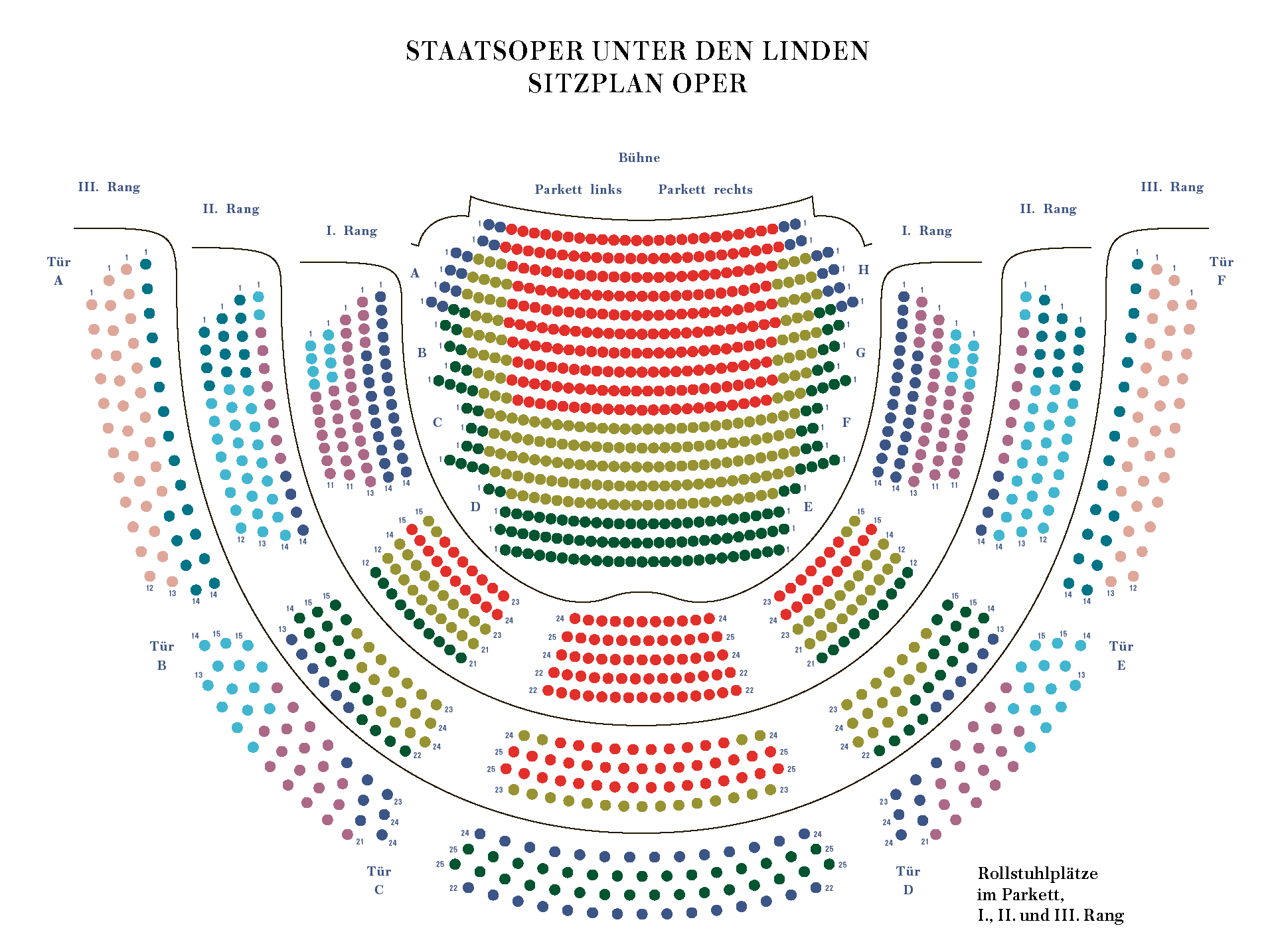
State Opera Unter den Linden

Staatsoper Unter den Linden is one of Berlin's most prestigious opera houses, with a rich history and significant cultural impact.


History:
The Staatsoper Unter den Linden was originally built between 1741 and 1743, under the direction of architect Georg Wenzeslaus von Knobelsdorff. It was commissioned by Frederick II of Prussia and was initially named the Königliche Oper (Royal Opera). The opera house has undergone several renovations and reconstructions, notably after World War II damage. It reopened in 1984, following a major renovation.


Construction:
The original design was characterized by its Baroque style, featuring an elegant façade and a grand entrance. The building was reconstructed in the 1950s and 1980s, maintaining its classical exterior while modernizing the interior. The façade features a classic portico with six Corinthian columns and a prominent central pediment.


Interior:
The interior is known for its opulent and classical design. The auditorium is renowned for its acoustics and grandeur, with luxurious velvet seats and elaborate decorations. The stage and seating areas have been updated to meet modern performance standards while preserving historical aesthetics.


Concerts and Performances:
The Staatsoper Unter den Linden hosts a variety of performances, including operas, orchestral concerts, and ballet. It is home to the Staatskapelle Berlin, one of Germany's leading orchestras. The opera house is celebrated for its high-quality productions and its role in Berlin’s vibrant cultural scene.


JOURNEY

The Staatsoper Unter den Linden has completely barrier-free access due to its excellent public transport connections.

ADDRESS: Unter den Linden 7; 10117 Berlin

SUBURBAN RAILWAY
S+U Friedrichstraße (S1, S2, S5, S7, S25, S75)


SUBWAY
Hausvogteiplatz (U2)
Museumsinsel (U5)
Stadtmitte (U2, U6)
Unter den Linden (U5, U6)


BUS
Staatsoper (100, 245, 300)
Unter den Linden/Friedrichstraße (100, 147, 245, 300, N6)


PARKING
Q-PARK parking garage Unter den Linden/Staatsoper
Bebelplatz, 10117 Berlin
There are five electric charging stations in the parking garage. Further information can be found here.

The underground car park on Bebelplatz offers disabled parking spaces and direct access to the opera house. On entering the car park between 5.30pm and 11.30pm, the maximum parking fee is €7. To use this tariff, enter your parking ticket in one of the pay machines and the message »Theatertarif« will appear on the display. Please note that it is not possible to use the tariff if you enter the car park before 5.30pm. so it will not be shown on the display. TIP: If you pay the theatre tariff at the pay machine before the event, you can avoid unnecessary waiting after the show.


Buy now

Gift vouchers

Gift someone an unforgettable night at the opera.
Choose a gift coupon and let them pick the performance they love—music, drama, and world-class artistry, all in one elegant experience.
Official Tickets for Berlin Opera Theater, Germany, Classical Concerts, etc.
Instagram
Payment
Ticket search
Google Play
App Store
© 2026 RM EUROPA TICKET GmbH
Whatsapp