


en
en v
Phone
Cart0 Tickets
Total: 0
Account
Calendar
Search
Menu

St Matthew Passion

VenueDeutsche Oper Berlin
CalendarThu 25 Mar 2027 - Sun 04 Apr 2027
Synopsis/Details


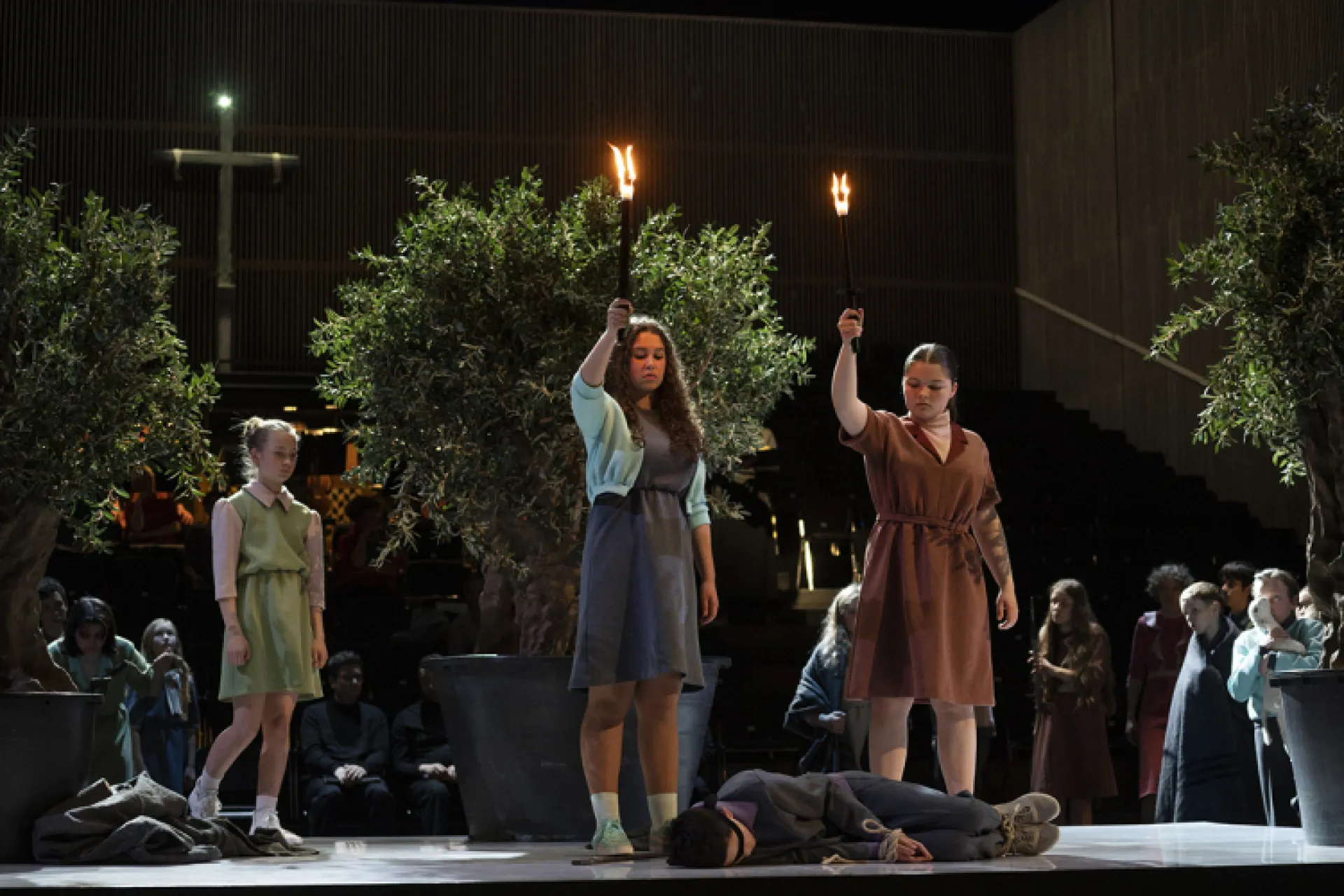
This oratorio tells the story of the last days in the life of Jesus Christ. Exactly three hundred years ago, Johann Sebastian Bach set the Gospel text to music: The premiere was held on Good Friday in 1727. Benedikt von Peter’s production takes the inherent tradition of the Stations of the Cross seriously: Bach’s double-choir masterpiece unfolds as an acoustic crucifix; the audience sits amidst the musical action, exposing their own bodies to this Passion and its unsettling beauty. Betrayal, mortal agony, sacrifice and forgiveness do not appear as a distant event of salvation, but as a sober question for our present: What are the sins for which the Son must be sacrificed year after year? Not the Evangelist, but children bring the parable to life. They shoulder the cross, prevent Judas’s suicide with an embrace, and put the value system of a Christian society up for discussion. Marc Minkowski, a renowned specialist in Baroque vocal music and a guest at the Deutsche Oper for the first time, conducts this special revival exactly on the 300th anniversary of the work! 

Introduction: 45 minutes before the performance in the Rang Foyer on the right 

Language: In German language with German and English surtitles 

Duration: 3 hours 15 minutes / including an interval after approx. 65 minutes 

Age recommendation: from age 11 

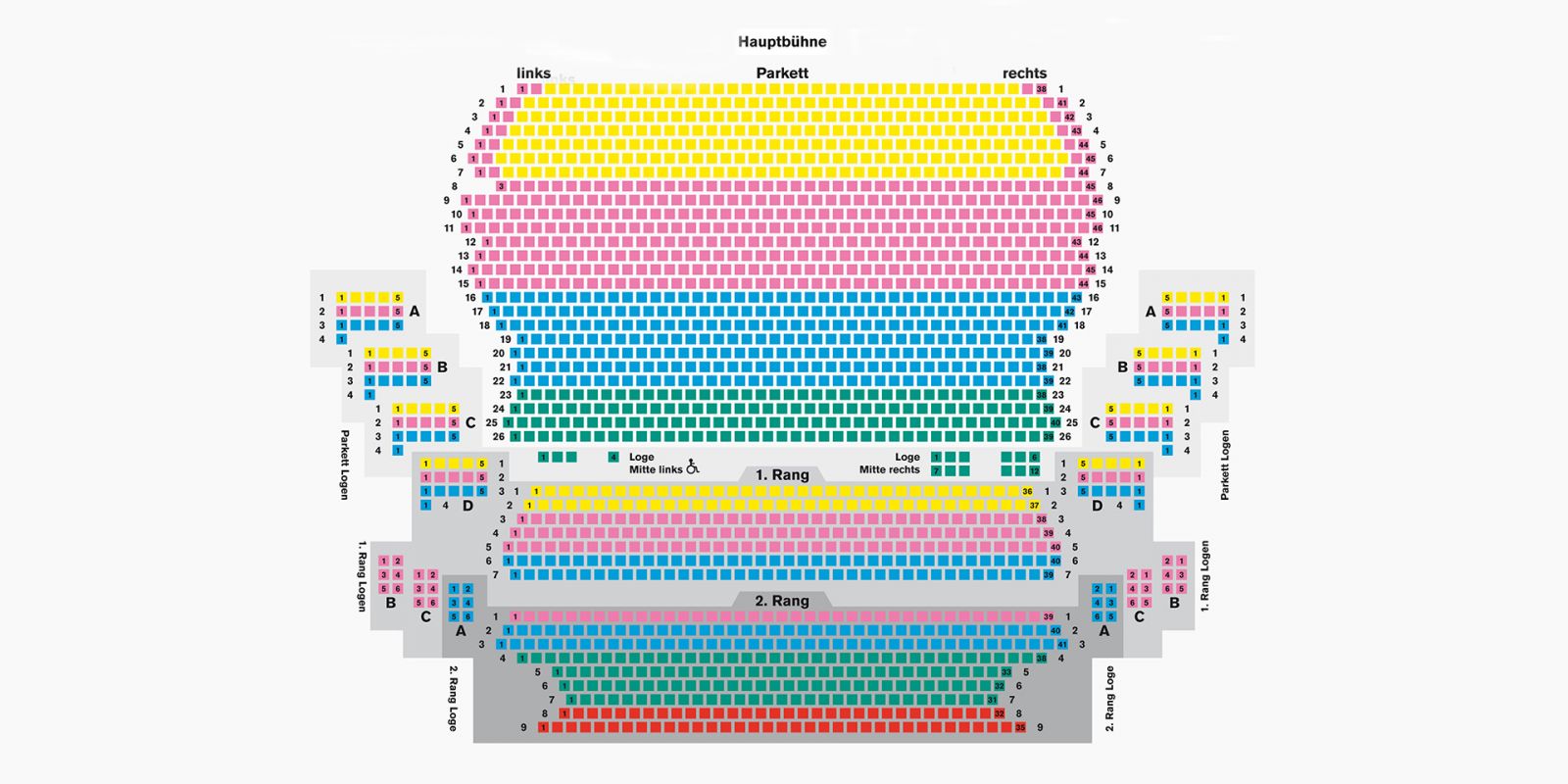
Further information: There are visitor seats on the stage, and formations of chorus and orchestra are placed in the audience area. 

Co-production: A co-production between Deutsche Oper Berlin and Theater Basel. The children's chorus is sponsored by Dobolino e.V.

Cast

Oratorio in two parts by Johann Sebastian Bach
Libretto by Picaneder based on the Matthew Gospel from the Luther Bible
Premiere probably on Good Friday, 11 April 1727 in Leipzig
Premiere at the Deutsche Oper Berlin on 5 May 2023


Team 

Conductor: Marc Minkowski

Director: Benedikt von Peter

Assistant director: Ulrike Jühe

Set design: Natascha von Steiger

Costume design: Lene Schwind

Video: Bert Zander

Light: Roland Edrich

Chorus direction: Marco Medved

Children's Chorus direction: Christian Lindhorst

Dramaturgy: Dorothea Hartmann


Cast 

Evangelist: Kieran Carrel

Tenor / Witness: Petr Nekoranec

Jesus: Nicolai Elsberg

Bass: Padraic Rowan

Petrus / Pontifex: Christopher Humbert Jr.

Judas / Pilatus / Pontifex: Tom Nicholson

Soprano / Maid / Pilate's wife: Lilit Davtyan

Alto / Witness / Maid: Maria Warenberg

High priest: Young Choi

Girl: N. N.

Chorus: Chor der Deutschen Oper Berlin; Kinderchor der Deutschen Oper Berlin

Venue
Deutsche Oper Berlin

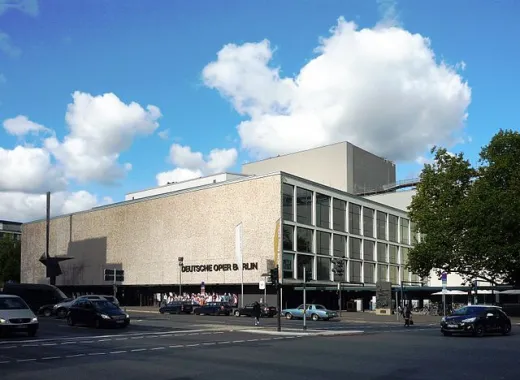
The Deutsche Oper Berlin is an opera company located in the Charlottenburg district of Berlin, Germany. The resident building is the country's second largest opera house and also home to the Berlin State Ballet.

The company's history goes back to the Deutsches Opernhaus built by the then independent city of Charlottenburg—the "richest town of Prussia"—according to plans designed by Heinrich Seeling from 1911. It opened on November 7, 1912 with a performance of Beethoven's Fidelio, conducted by Ignatz Waghalter. After the incorporation of Charlottenburg by the 1920 Greater Berlin Act, the name of the resident building was changed to Städtische Oper (Municipal Opera) in 1925.


Deutsches Opernhaus, 1912
With the Nazi Machtergreifung in 1933, the opera was under control of the Reich Ministry of Public Enlightenment and Propaganda. Minister Joseph Goebbels had the name changed back to Deutsches Opernhaus, competing with the Berlin State Opera in Mitte controlled by his rival, the Prussian minister-president Hermann Göring. In 1935, the building was remodeled by Paul Baumgarten and the seating reduced from 2300 to 2098. Carl Ebert, the pre-World War II general manager, chose to emigrate from Germany rather than endorse the Nazi view of music, and went on to co-found the Glyndebourne opera festival in England. He was replaced by Max von Schillings, who acceded to enact works of "unalloyed German character". Several artists, like the conductor Fritz Stiedry or the singer Alexander Kipnis followed Ebert into emigration. The opera house was destroyed by a RAF air raid on 23 November 1943. Performances continued at the Admiralspalast in Mitte until 1945. Ebert returned as general manager after the war.

After the war, the company in what was now West Berlin used the nearby building of the Theater des Westens until the opera house was rebuilt. The sober design by Fritz Bornemann was completed on 24 September 1961. The opening production was Mozart's Don Giovanni. The new building opened with the current name.


Accomodation

Buy now

Gift vouchers

Gift someone an unforgettable night at the opera.
Choose a gift coupon and let them pick the performance they love—music, drama, and world-class artistry, all in one elegant experience.
Berlin Opera Tickets
Facebook
Payment
Ticket search
Google Play
App Store
© 2026 RM EUROPA TICKET GmbH
Whatsapp