


en
en v
Phone
Cart0 Tickets
Total: 0
Account
Calendar
Search
Menu

Salome

VenueState Opera Unter den Linden
CalendarSun 10 Jan 2027 - Fri 29 Jan 2027
Synopsis/Details


Salome
Drama in One Act (1905)
Music by Richard Strauss
Libretto based on Oscar Wilde's play Salomé, translated into German by Hedwig Lachmann


Duration: approx. 1 hr 40 min, no interval
Language: Performed in German with German and English surtitles
Recommended age: 16+


Raised in an environment devoid of restraint or moderation, the eccentric Princess Salome becomes fascinated by the very different nature of the ascetic prophet Jochanaan, whom her mother Herodias and her abusive stepfather Herod keep imprisoned. When Jochanaan brusquely rejects Salome's advances, her fascination turns into an all-consuming obsession, and she exploits her stepfather's lust to achieve her goal.

Having promised to grant Salome any wish in return for her sensual "Dance of the Seven Veils," Herod is confronted with a horrifying demand: as her reward, she asks for Jochanaan's head on a silver platter. In a frenzy of madness, she kisses his lifeless lips, fulfilling her obsessive desire—until Herod orders Salome's execution. Oscillating between an intensely psychological portrait and the depiction of intoxicating, unrestrained sensuality, Richard Strauss achieved his first overwhelming operatic triumph in 1905 with his adaptation of Oscar Wilde's scandalous and shocking drama of decadence. In provocatively ecstatic orchestral soundscapes, he transforms the feverish emotional turmoil and profound psychological depths of his extraordinary heroine into shimmering, at times uncompromising music. With the overwhelming power of a vast orchestra, Strauss vividly captures not only Salome's psychological disintegration and irresistible allure, but also her emotional coldness and Jochanaan's impassioned condemnations in a way that is both thrilling and deeply unsettling.


Plot


Scene 1

The prophet Jokanaan is hanging captive over the scene. The captain Narraboth is in love with Salome, the daughter of Queen Herodias and niece of King Herod. He serenades her beauty in the light of the moon. Herodias’ page tries to keep him away from Salome. Jokanaan utters prophecies that upset the soldiers; they don’t understand him.


Scene 2

Salome flees from King’s advances. She is fascinated by Jokanaan, who is now brought down to the ground. Salome wants to speak to him and demands that he be brought to her in violation of Herod’s commands. The soldiers refuse at first, but Narraboth is unable to resist Salome’s enticements and orders that Jokanaan be brought to her.


Scene 3

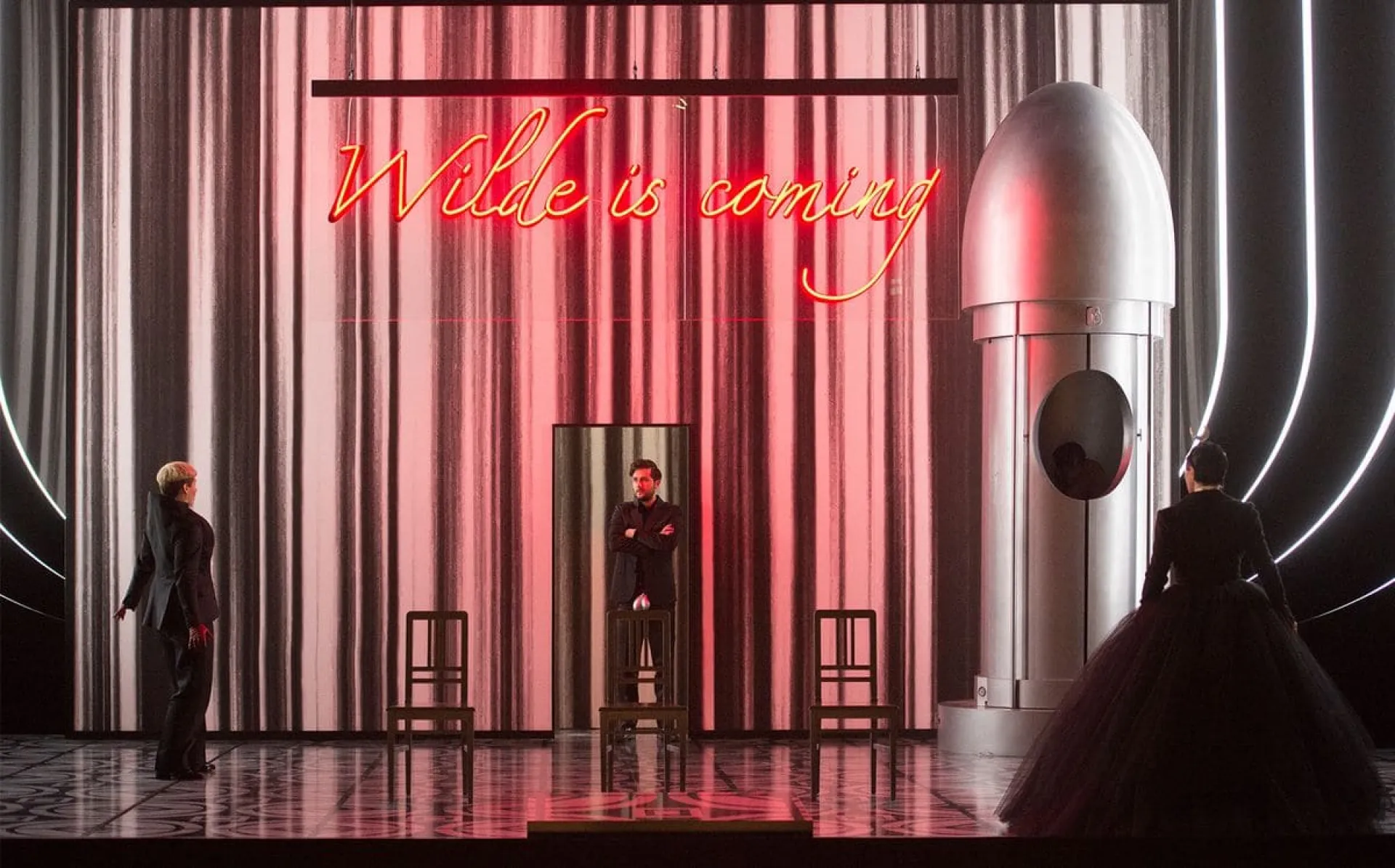
Oscar Wilde enters the scene and frees the prophet. Jokanaan steps forward and emphatically explains his worldview. He accuses Herod and Herodias of sin and evildoing. Salome, fascinated by the prophet, tries to approach him. Narraboth wants to keep Salome back. But Salome is overcome by a delirium of love for the body, hair, and mouth of Jokanaan, while the prophet tries to fend off her longing. The situation escalates. With Wilde present, a struggle of desire, resistance, attraction, the radical search for truth and ecstasy. Narraboth stabs himself to death. With his last ounce of strength, Jokanaan curses Salome and withdraws. Salome flees.


Scene 4

Herod and his wife Herodias burst in. Both are looking for Salome, who is sitting in silence. Herod fears his coming death. He tries to rally up his courage and makes advances to Salome to assure himself of his potency in the face of her youth. Herodias is disgusted, Salome refuses him coldly. The scene is repeatedly interrupted by Jokanaan’s prophecies, to which Herodias reacts violently.

A group of five Jews initiates a theological dispute over the concept of God and the possible appearance of the Messiah. Two Nazarenes describe the works of Jesus. Herod wants to know nothing of this and demands that Salome dance for him. Salome ultimately gives in, but in return Herod has to swear to fulfill her own demand, whatever it might be. Salome dances for Herod, accompanied by Wilde.


Herod is charmed and willing to fulfill Salome’s wish. Salome demands the head of Jokanaan. Herodias encourages her in making this wish. Caught in a fearful panic, Herod tries to convince Salome to withdraw her demand with offers of countless riches. Salome refuses to give in. Finally, Herod agrees. Jokanaan is brought away. Eagerly listening, Salome awaits his head. Jokanaan is killed.

Salome sings of her satisfied desire and her longing. Herod is horrified, while Herodias accepts the turn of events. Wilde withdraws. Salome kisses the severed head of Jokanaan. But this is also her demise: Herod now orders his soldiers to kill Salome. The soldiers murder Salome.

Cast

Conductor: Axel Kober
Production: Hans Neuenfels
Set and Costume Design: Reinhard von der Thannen
Choreography: Sommer Ulrickson
Lighting Design: Stefan Bolliger


Salome: Elena Stikhina
Herod: Stephan Rügamer
Jokanaan: Wolfgang Koch
Herodias: Anja Kampe
Narraboth: Johan Krogius
Herodias' Page: Rebecka Wallroth
Jews: Álvaro Diana, Junho Hwang, Karl-Michael Ebner, Andrés Moreno García, Temur Bidzishvili
Nazarenes: Friedrich Hamel, Irakli Pkhaladze
Soldiers: David Oštrek, Martin Iivarinen
A Cappadocian: Temur Bidzishvili
A Slave: Jingjing Xu
Oscar Wilde: Christian Natter


Staatskapelle Berlin

Venue
State Opera Unter den Linden

Staatsoper Unter den Linden is one of Berlin's most prestigious opera houses, with a rich history and significant cultural impact.


History:
The Staatsoper Unter den Linden was originally built between 1741 and 1743, under the direction of architect Georg Wenzeslaus von Knobelsdorff. It was commissioned by Frederick II of Prussia and was initially named the Königliche Oper (Royal Opera). The opera house has undergone several renovations and reconstructions, notably after World War II damage. It reopened in 1984, following a major renovation.


Construction:
The original design was characterized by its Baroque style, featuring an elegant façade and a grand entrance. The building was reconstructed in the 1950s and 1980s, maintaining its classical exterior while modernizing the interior. The façade features a classic portico with six Corinthian columns and a prominent central pediment.


Interior:
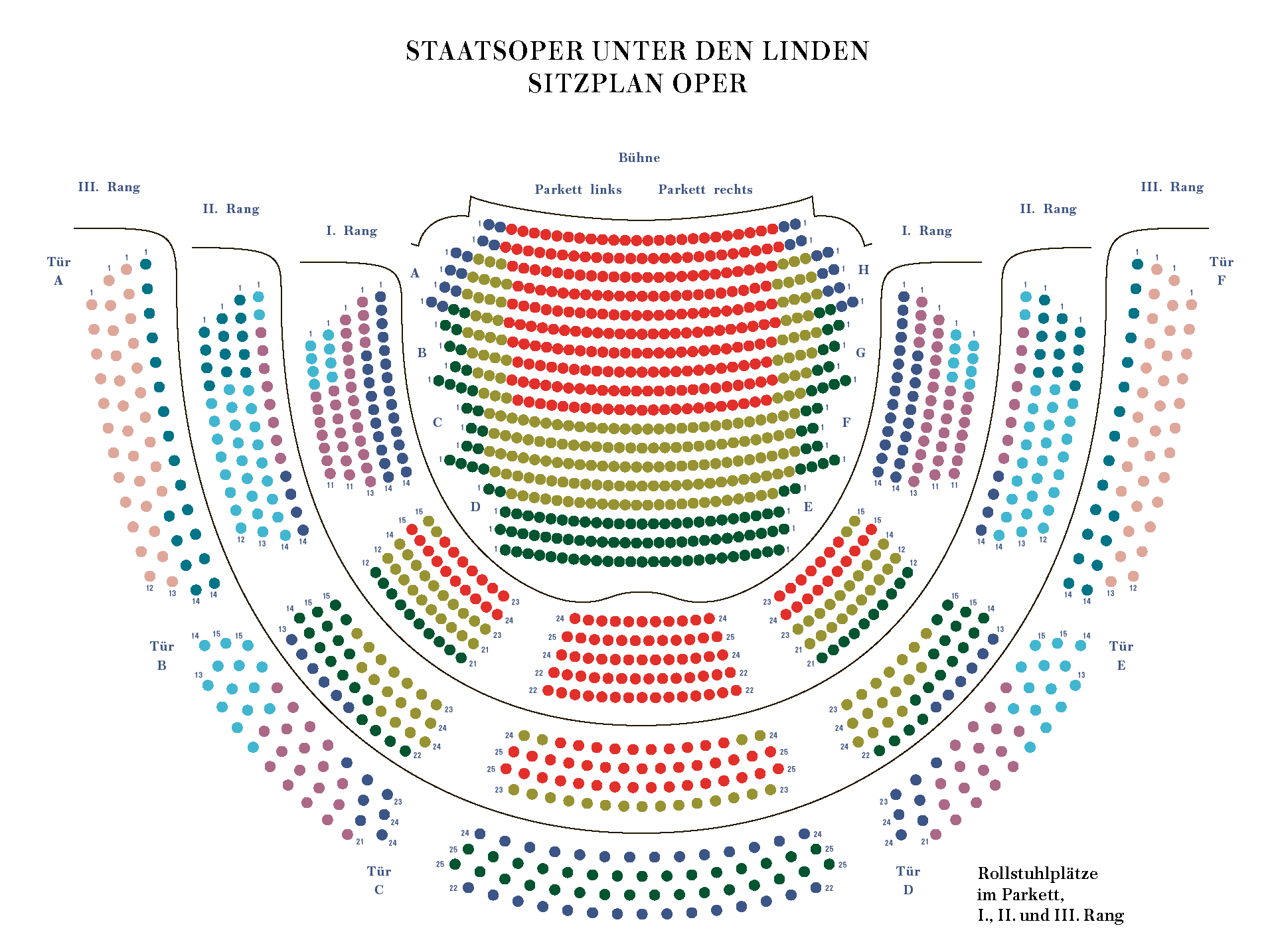
The interior is known for its opulent and classical design. The auditorium is renowned for its acoustics and grandeur, with luxurious velvet seats and elaborate decorations. The stage and seating areas have been updated to meet modern performance standards while preserving historical aesthetics.


Concerts and Performances:
The Staatsoper Unter den Linden hosts a variety of performances, including operas, orchestral concerts, and ballet. It is home to the Staatskapelle Berlin, one of Germany's leading orchestras. The opera house is celebrated for its high-quality productions and its role in Berlin’s vibrant cultural scene.


JOURNEY

The Staatsoper Unter den Linden has completely barrier-free access due to its excellent public transport connections.

ADDRESS: Unter den Linden 7; 10117 Berlin

SUBURBAN RAILWAY
S+U Friedrichstraße (S1, S2, S5, S7, S25, S75)


SUBWAY
Hausvogteiplatz (U2)
Museumsinsel (U5)
Stadtmitte (U2, U6)
Unter den Linden (U5, U6)


BUS
Staatsoper (100, 245, 300)
Unter den Linden/Friedrichstraße (100, 147, 245, 300, N6)


PARKING
Q-PARK parking garage Unter den Linden/Staatsoper
Bebelplatz, 10117 Berlin
There are five electric charging stations in the parking garage. Further information can be found here.

The underground car park on Bebelplatz offers disabled parking spaces and direct access to the opera house. On entering the car park between 5.30pm and 11.30pm, the maximum parking fee is €7. To use this tariff, enter your parking ticket in one of the pay machines and the message »Theatertarif« will appear on the display. Please note that it is not possible to use the tariff if you enter the car park before 5.30pm. so it will not be shown on the display. TIP: If you pay the theatre tariff at the pay machine before the event, you can avoid unnecessary waiting after the show.


Buy now

Gift vouchers

Gift someone an unforgettable night at the opera.
Choose a gift coupon and let them pick the performance they love—music, drama, and world-class artistry, all in one elegant experience.
Official Tickets for Berlin Opera Theater, Germany, Classical Concerts, etc.
Instagram
Payment
Ticket search
Google Play
App Store
© 2026 RM EUROPA TICKET GmbH
Whatsapp