


en
en v
Phone
Cart0 Tickets
Total: 0
Account
Calendar
Search
Menu

Nixon In China

VenueDeutsche Oper Berlin
CalendarSun 10 Jan 2027 - Sat 30 Jan 2027
Synopsis/Details


Nixon in China - John Adams [*1947]


Synopsis

Time: February 1972.

Place: In and around Peking.


Act 1

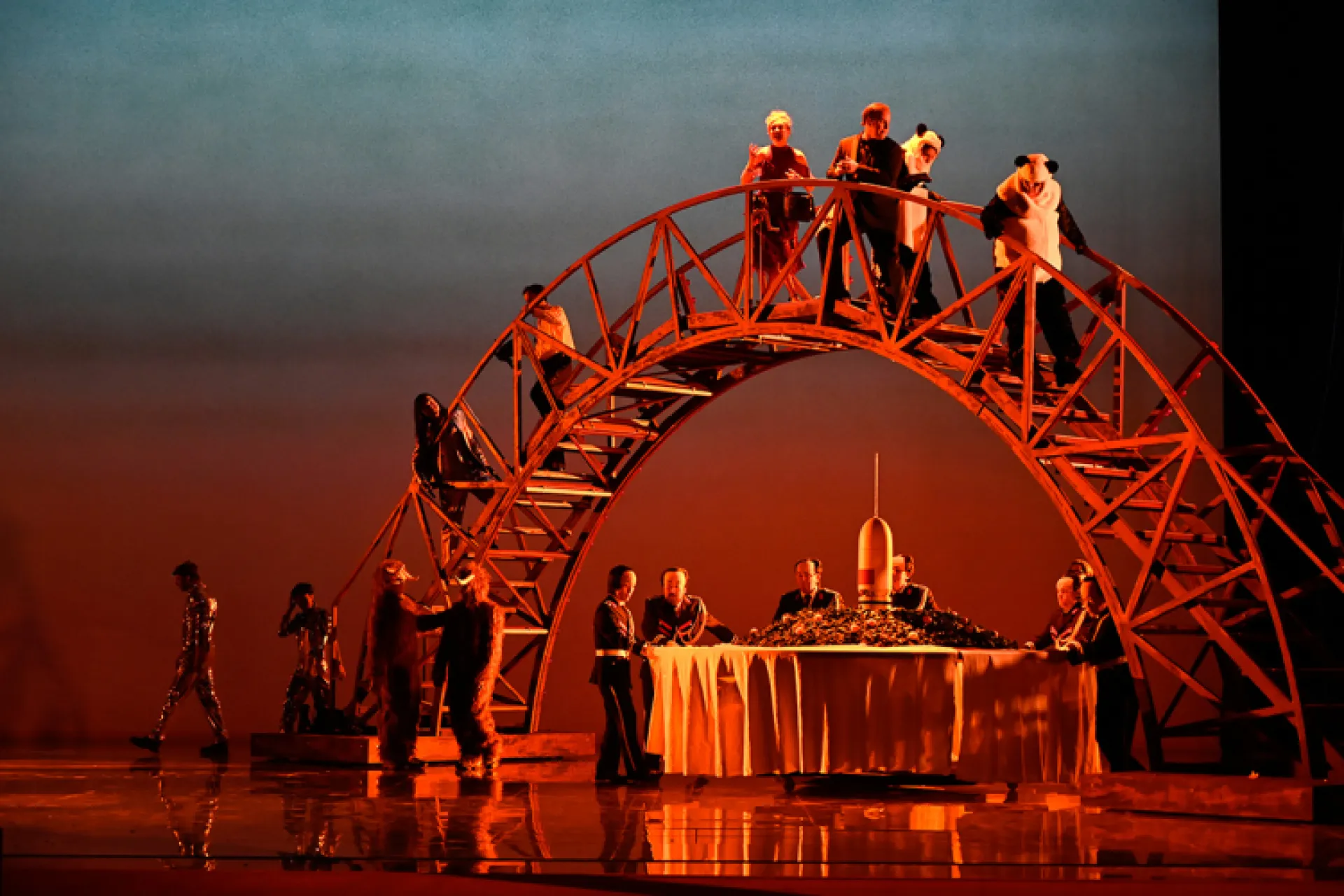
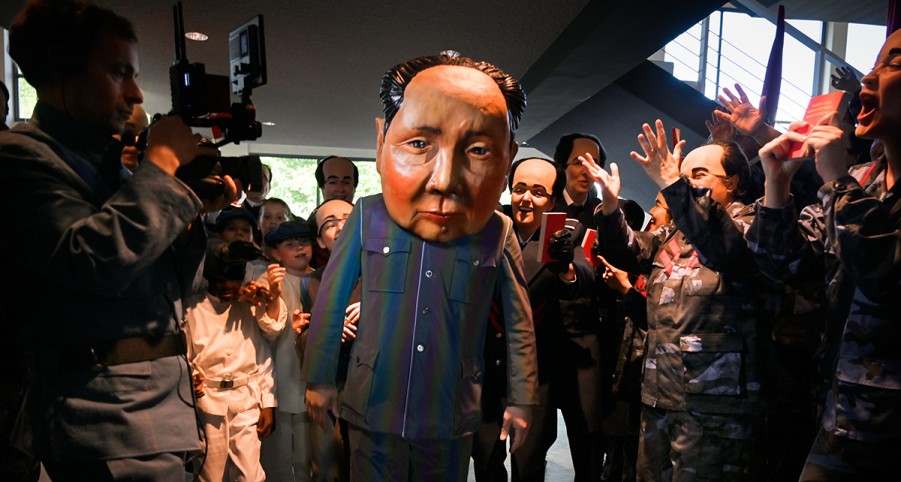
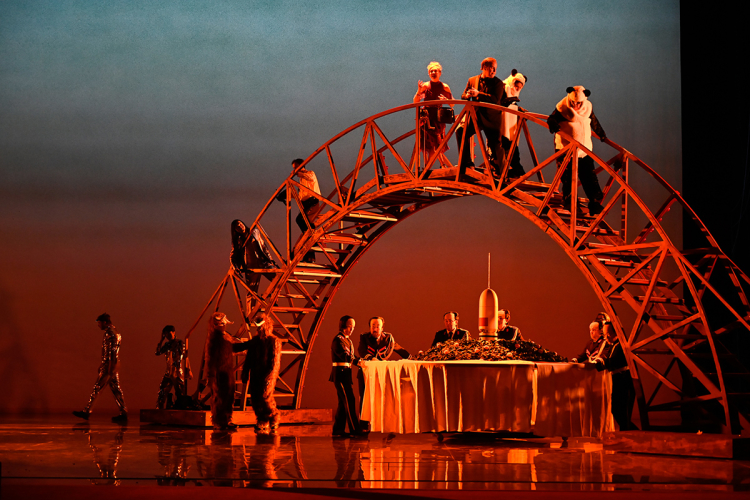
At Peking Airport, contingents of the Chinese military await the arrival of the American presidential aircraft "Spirit of '76", carrying Nixon and his party. The military chorus sings the Three Rules of Discipline and Eight Points for Attention. After the aircraft touches down, Nixon emerges with Pat Nixon and Henry Kissinger. The president exchanges stilted greetings with the Chinese premier, Chou En-lai, who heads the welcoming party. Nixon speaks of the historical significance of the visit, and of his hopes and fears for the encounter ("News has a kind of mystery"). The scene changes to Chairman Mao's study, where the chairman awaits the arrival of the presidential party. Nixon and Kissinger enter with Chou, and Mao and the president converse in banalities as photographers record the scene. In the discussion that follows, the westerners are confused by Mao's gnomic and frequently impenetrable comments, which are amplified by his secretaries and often by Chou. The scene changes again, to the evening's banquet in the Great Hall of the People. Chou toasts the American visitors ("We have begun to celebrate the different ways") and Nixon responds ("I have attended many feasts"), after which the toasts continue as the atmosphere becomes increasingly convivial. Nixon, a politician who rose to prominence on anti-communism, announces: "Everyone, listen; just let me say one thing. I opposed China, I was wrong".


Act 2

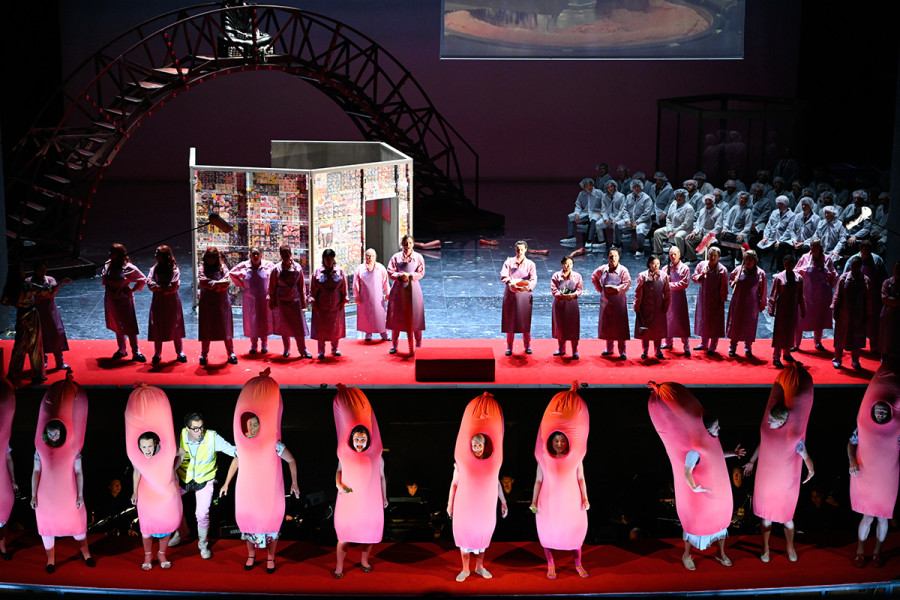
Pat Nixon is touring the city, with guides. Factory workers present her with a small model elephant which, she delightedly informs them, is the symbol of the Republican Party which her husband leads. She visits a commune where she is greeted enthusiastically, and is captivated by the children's games that she observes in the school. "I used to be a teacher many years ago", she sings, "and now I'm here to learn from you". She moves on to the Summer Palace, where in a contemplative aria ("This is prophetic") she envisages a peaceful future for the world. In the evening the presidential party, as guests of Mao's wife Chiang Ch'ing, attends the Peking Opera for a performance of a political ballet-opera The Red Detachment of Women. This depicts the downfall of a cruel and unscrupulous landlord's agent (played by an actor who strongly resembles Kissinger) at the hands of brave women revolutionary workers. The action deeply affects the Nixons; at one point Pat rushes onstage to help a peasant girl she thinks is being whipped to death. As the stage action ends, Chiang Ch'ing, angry at the apparent misinterpretation of the piece's message, sings a harsh aria ("I am the wife of Mao Tse-tung"), praising the Cultural Revolution and glorifying her own part in it. A revolutionary chorus echoes her words.


Act 3

On the last evening of the visit, as they lie in their respective beds, the chief protagonists muse on their personal histories in a surreal series of interwoven dialogues. Nixon and Pat recall the struggles of their youth; Nixon evokes wartime memories ("Sitting round the radio"). Mao and Chiang Ch'ing dance together, as the Chairman remembers "the tasty little starlet" who came to his headquarters in the early days of the revolution. As they reminisce, Chiang Ch'ing asserts that "the revolution must not end". Chou meditates alone; the opera finishes on a thoughtful note with his aria "I am old and I cannot sleep", asking: "How much of what we did was good?" The early morning birdcalls are summoning him to resume his work, while "outside this room the chill of grace lies heavy on the morning grass".

Introduction: 45 minutes before the performance in the Rang Foyer on the right

Language: In English with German and English surtitles

Duration: 3 hours 30 minutes / including an interval after approx. 100 minutes

Age recommendation: from age 16

Co-production: Kindly supported by Förderkreis der Deutschen Oper Berlin e. V.

Cast

Opera in three acts by John Adams
Libretto by Alice Goodman
First performance at the Houston Grand Opera on 22 October 1987
Premiere at Deutsche Oper Berlin on 22 June 2024


Team

Conductor: Daniel Carter

Artistic direction: Hauen und Stechen

Director: Franziska Kronfoth; Julia Lwowski

Stage design: Yassu Yabara

Costume design: Christina Schmitt

Video, Live camera: Martin Mallon

Light design: Henning Streck

Sound design: Arne Vierck

Chorus direction: Marco Medved

Dramaturgy: Carolin Müller-Dohle


Cast

Chou En-lai: Kyle Miller

Richard Nixon: Robin Adams

Henry Kissinger: Padraic Rowan

Nancy T'ang, (First Secretary to Mao): Karis Tucker

Second Secretary to Mao: Lauryn Davis

Third Secretary to Mao: Stephanie Wake-Edwards

Mao Tse-tung: Matthias Klink

Pat Nixon: Heidi Stober

Chiang Ch’ing (Madame Mao Tse-tung): Hye-Young Moon

Ching Hua (First Actress): Gina-Lisa Maiwald

Ching Hua (Second Actress): Angela Braun

Ching Hua / Hung (Actor): Thorbjörn Björnsson

Dancer / Performer: Jean Chaize; Brigitte Cuvelier

Chorus: Chor der Deutschen Oper Berlin

Orchestra: Orchester der Deutschen Oper Berlin

Venue
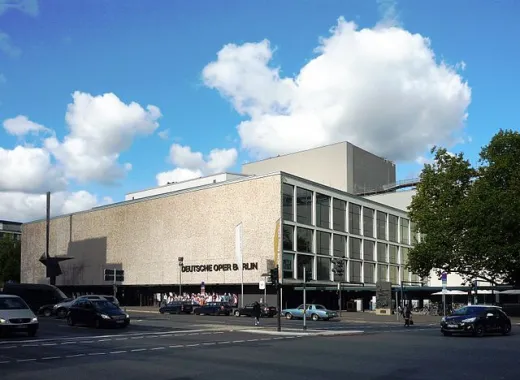
Deutsche Oper Berlin

The Deutsche Oper Berlin is an opera company located in the Charlottenburg district of Berlin, Germany. The resident building is the country's second largest opera house and also home to the Berlin State Ballet.

The company's history goes back to the Deutsches Opernhaus built by the then independent city of Charlottenburg—the "richest town of Prussia"—according to plans designed by Heinrich Seeling from 1911. It opened on November 7, 1912 with a performance of Beethoven's Fidelio, conducted by Ignatz Waghalter. After the incorporation of Charlottenburg by the 1920 Greater Berlin Act, the name of the resident building was changed to Städtische Oper (Municipal Opera) in 1925.


Deutsches Opernhaus, 1912
With the Nazi Machtergreifung in 1933, the opera was under control of the Reich Ministry of Public Enlightenment and Propaganda. Minister Joseph Goebbels had the name changed back to Deutsches Opernhaus, competing with the Berlin State Opera in Mitte controlled by his rival, the Prussian minister-president Hermann Göring. In 1935, the building was remodeled by Paul Baumgarten and the seating reduced from 2300 to 2098. Carl Ebert, the pre-World War II general manager, chose to emigrate from Germany rather than endorse the Nazi view of music, and went on to co-found the Glyndebourne opera festival in England. He was replaced by Max von Schillings, who acceded to enact works of "unalloyed German character". Several artists, like the conductor Fritz Stiedry or the singer Alexander Kipnis followed Ebert into emigration. The opera house was destroyed by a RAF air raid on 23 November 1943. Performances continued at the Admiralspalast in Mitte until 1945. Ebert returned as general manager after the war.

After the war, the company in what was now West Berlin used the nearby building of the Theater des Westens until the opera house was rebuilt. The sober design by Fritz Bornemann was completed on 24 September 1961. The opening production was Mozart's Don Giovanni. The new building opened with the current name.


Accomodation

Buy now

Gift vouchers

Gift someone an unforgettable night at the opera.
Choose a gift coupon and let them pick the performance they love—music, drama, and world-class artistry, all in one elegant experience.
Berlin Opera Tickets
Facebook
Payment
Ticket search
Google Play
App Store
© 2026 RM EUROPA TICKET GmbH
Whatsapp