
 EN
EN DE
DE IT
IT FR
FR ES
ES RU
RU JP
JP RO
RO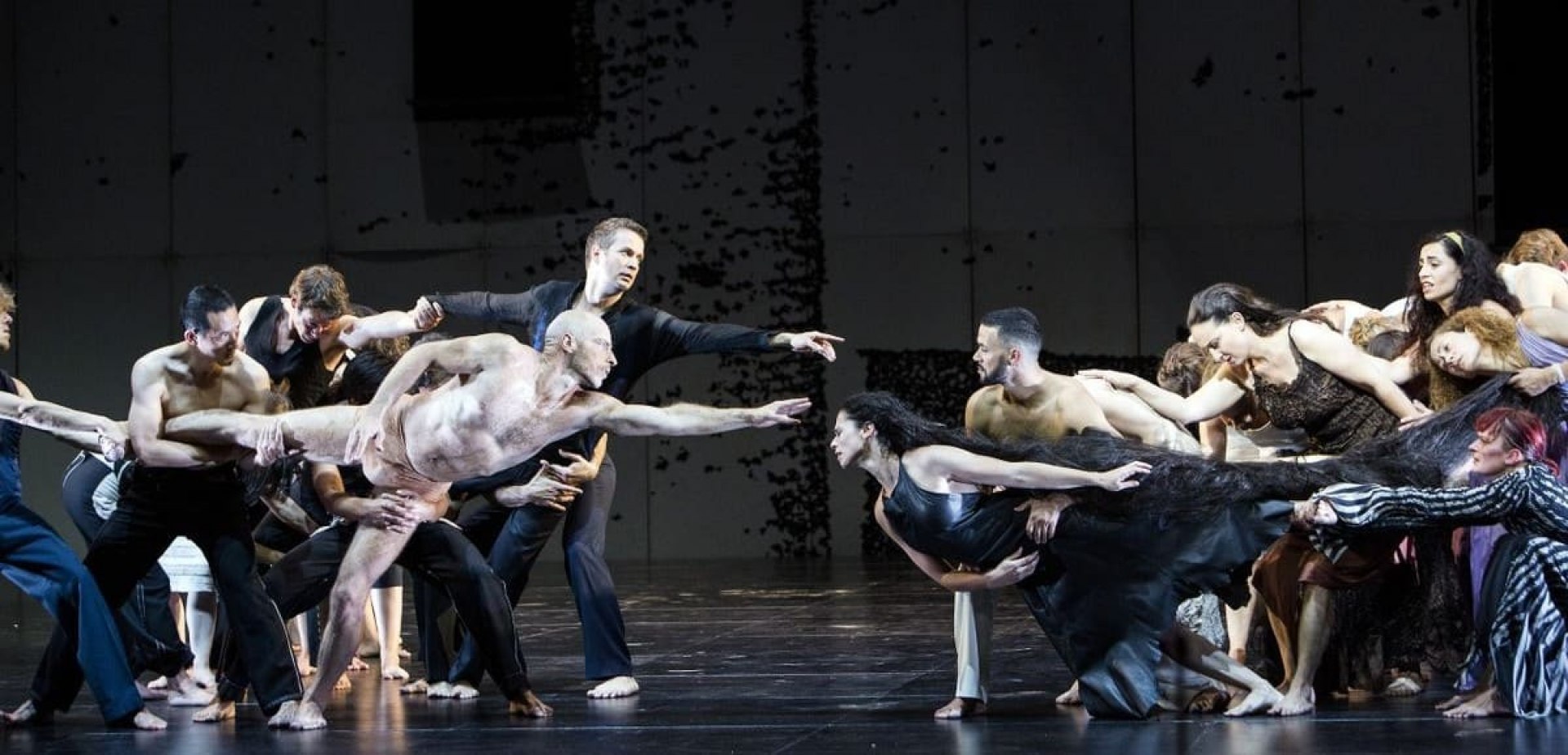
© Bernd Uhlig
Dido and Aeneas
Order tickets
 June 2029 June 2029 | ||||||
|---|---|---|---|---|---|---|
Mo | Tu | We | Th | Fr | Sa | Su |
Dido and Aeneas
Opera in a prologue and three acts (1689)
Music by Henry Purcell
Text by Nahum Tate based on Book IV of Virgil’s "Aeneid"
Duration: approx. 1 hour 45 minutes (without interval)
Language: English, with German and English surtitles
Recommended age: 10 years and older
The setting is Carthage, in ancient times: the hero Aeneas flees from burning Troy and arrives in North Africa via the Mediterranean Sea with his fleet of ships, where he meets the beautiful queen Dido. They are lovestruck – and yet fail to bond because of fate’s intervention. Aeneas continues on his journey to form a new kingdom in Italy, while the abandoned Dido is left no alternative but to stay.
Henry Purcell composed his one "genuine" opera in 1689, a work that stood out for its musical ingenuity. Virgil’s epic story of the hero and Carthaginian queen told in Aeneid found its echo in his equally vivid music. Human passions are candidly unveiled – both their joys and excitements as well as their hardships and worries, all the way to deepest despair at the inexorability of divine will. Dido’s famous lament, with which she ends her life, and the opera draws to a close, and where an entire world is evoked in a few words, demonstrates Purcell’s extraordinary expressiveness. But his skill, too, in writing rhythmically concise dance movements and melodic choruses sealed the composer’s reputation among his contemporaries and ensured the admiration of a truly exceptional composer for posterity. Song, performance and dance combine to create a special form of opera.
Plot
Prologue
Phoebus, the Sun God, rises from the sea in his solar chariot. Together with the nereids he invokes the advent of Venus. Accompanied by the narrators, the observer travels through the waves. At the bottom of the sea he discovers the sunken city of Carthage.
Act one
At the palace, Arrival of the royal court
Trojan hero Aeneas has managed to save his small son Ascanius and carries his father from the ruins of burning Troy. Zeus has commissioned him to sail to Italy and found a new Kingdom with his comrades. In the course of their passage through the Mediterranean, the Trojans land at Carthage, the city ruled by Queen Dido. After her husband’s death, Dido has vowed never to remarry, pledging herself entirely to the welfare of her state. Dido honours Aeneas with a royal banquet. She falls in love with him. Dido is tormented by doubts. Belinda dispels her mistress’ misgivings. She knows that the Trojan Aeneas harbours similar feelings.
Act two
Witches’ scene (part I), Hunting company
The witches have assembled in a steep ravine. Their leader commands the destruction of Carthage as punishment for the irresponsible behaviour of Dido and Aeneas. A witch reports that Dido and Aeneas are hunting. The witch is ordered to disguise herself as Mercurius and announce Jove’s decision to Aeneas that he has to set sail for Italy at once. The remaining witches shall evoke a storm in order to drive the hunting company back to the city. Meanwhile, Belinda and the royal entourage are enjoying the beauty of the holy grove where they are resting. A seer interrupts their mood, accouncing that this is a place of doom. Dido arrives, followed by Aeneas who has felled a mighty boar. As soon as the lovers have retired to the tent prepared for them, a storm breaks. Aeneas alone is prevented by the witches from fleeing back to the city. The witch disguised as Mercurius commands him to leave for Italy immediately. The hero, although profoundly shaken, is prepared to fulfill his duty.
Act three
Mariners, Witches’ scene (part II), Lamento
The Trojans are preparing for their departure. The witches rejoice when they see the disconsolate Queen. Dido feels that the Gods have punished her with Aeneas’ faithlessness because she broke her vow; she refuses Aeneas’ offer to stay. The lovers accept the fate, that has failed to respect their innermost desires, and sacrifice their love. Belinda is unable to comfort. Aeneas sets sail with his comrades. Dido dies.
Program and cast
Musical Direction: Christopher Moulds
Direction, Choreography: Sasha Waltz
Musical Reconstruction: Attilio Cremonesi
Set Design: Thomas Schenk, Sasha Waltz
Costumes: Christine Birkle
Lighting: Thilo Reuther
Dido: Natalia Skrycka
Aeneas: Gyula Orendt
Belinda: Aphrodite Patoulidou
Sorceress: Hanseong Yun
Second Woman: Jingjing Xu
First Witch, A Sailor: Junho Hwang
Second Witch, Spirit: Álvaro Diana
Dancers of the Sasha Waltz & Guests Company, Vocalconsort Berlin, Academy for Ancient Music Berlin
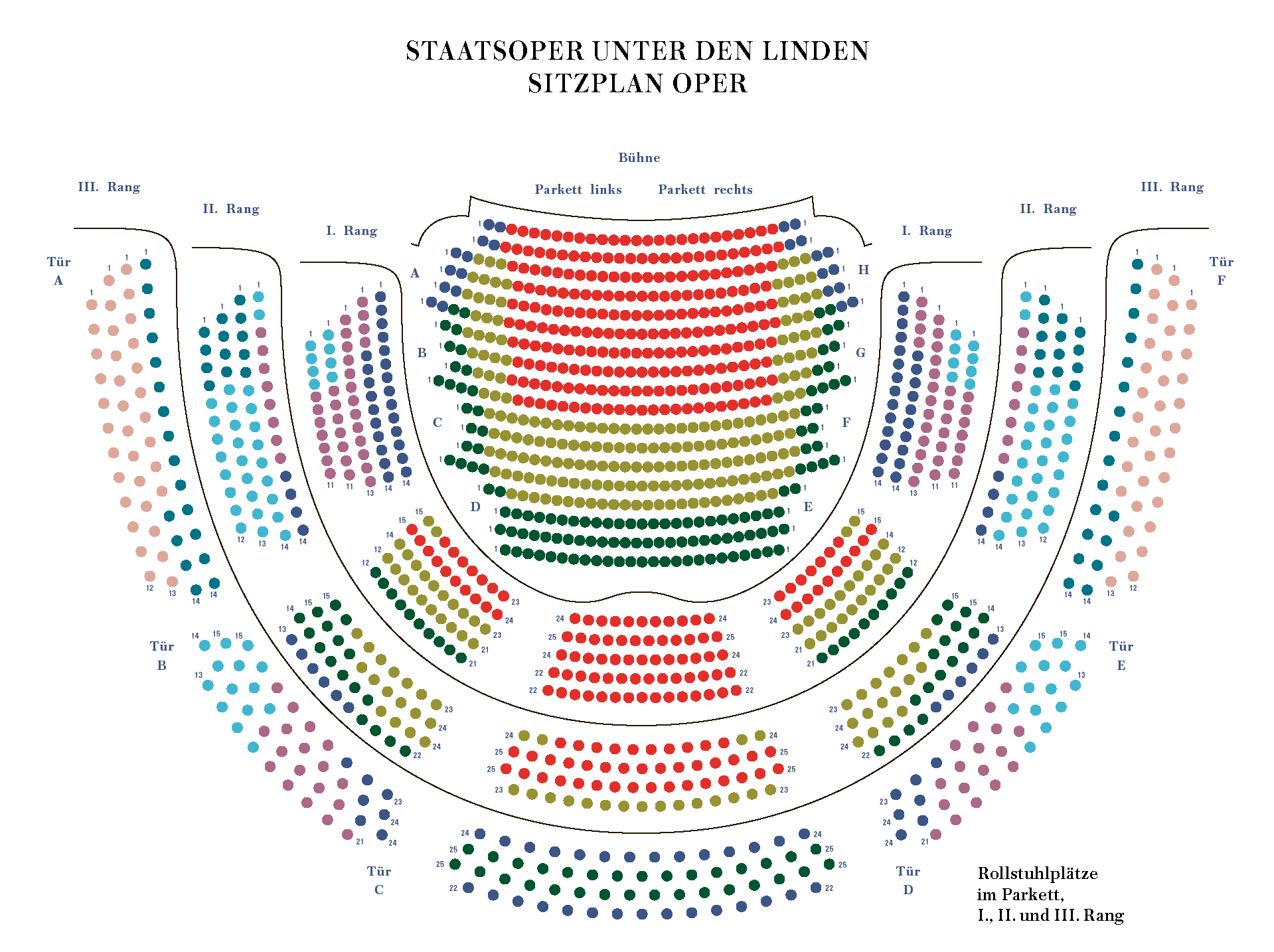
State Opera Unter den Linden
Staatsoper Unter den Linden is one of Berlin's most prestigious opera houses, with a rich history and significant cultural impact.
History:
The Staatsoper Unter den Linden was originally built between 1741 and 1743, under the direction of architect Georg Wenzeslaus von Knobelsdorff. It was commissioned by Frederick II of Prussia and was initially named the Königliche Oper (Royal Opera). The opera house has undergone several renovations and reconstructions, notably after World War II damage. It reopened in 1984, following a major renovation.
Construction:
The original design was characterized by its Baroque style, featuring an elegant façade and a grand entrance. The building was reconstructed in the 1950s and 1980s, maintaining its classical exterior while modernizing the interior. The façade features a classic portico with six Corinthian columns and a prominent central pediment.
Interior:
The interior is known for its opulent and classical design. The auditorium is renowned for its acoustics and grandeur, with luxurious velvet seats and elaborate decorations. The stage and seating areas have been updated to meet modern performance standards while preserving historical aesthetics.
Concerts and Performances:
The Staatsoper Unter den Linden hosts a variety of performances, including operas, orchestral concerts, and ballet. It is home to the Staatskapelle Berlin, one of Germany's leading orchestras. The opera house is celebrated for its high-quality productions and its role in Berlin’s vibrant cultural scene.
JOURNEY
The Staatsoper Unter den Linden has completely barrier-free access due to its excellent public transport connections.
ADDRESS: Unter den Linden 7; 10117 Berlin
SUBURBAN RAILWAY
S+U Friedrichstraße (S1, S2, S5, S7, S25, S75)
SUBWAY
Hausvogteiplatz (U2)
Museumsinsel (U5)
Stadtmitte (U2, U6)
Unter den Linden (U5, U6)
BUS
Staatsoper (100, 245, 300)
Unter den Linden/Friedrichstraße (100, 147, 245, 300, N6)
PARKING
Q-PARK parking garage Unter den Linden/Staatsoper
Bebelplatz, 10117 Berlin
There are five electric charging stations in the parking garage. Further information can be found here.
The underground car park on Bebelplatz offers disabled parking spaces and direct access to the opera house. On entering the car park between 5.30pm and 11.30pm, the maximum parking fee is €7. To use this tariff, enter your parking ticket in one of the pay machines and the message »Theatertarif« will appear on the display. Please note that it is not possible to use the tariff if you enter the car park before 5.30pm. so it will not be shown on the display. TIP: If you pay the theatre tariff at the pay machine before the event, you can avoid unnecessary waiting after the show.

© Bernd Uhlig
Related events